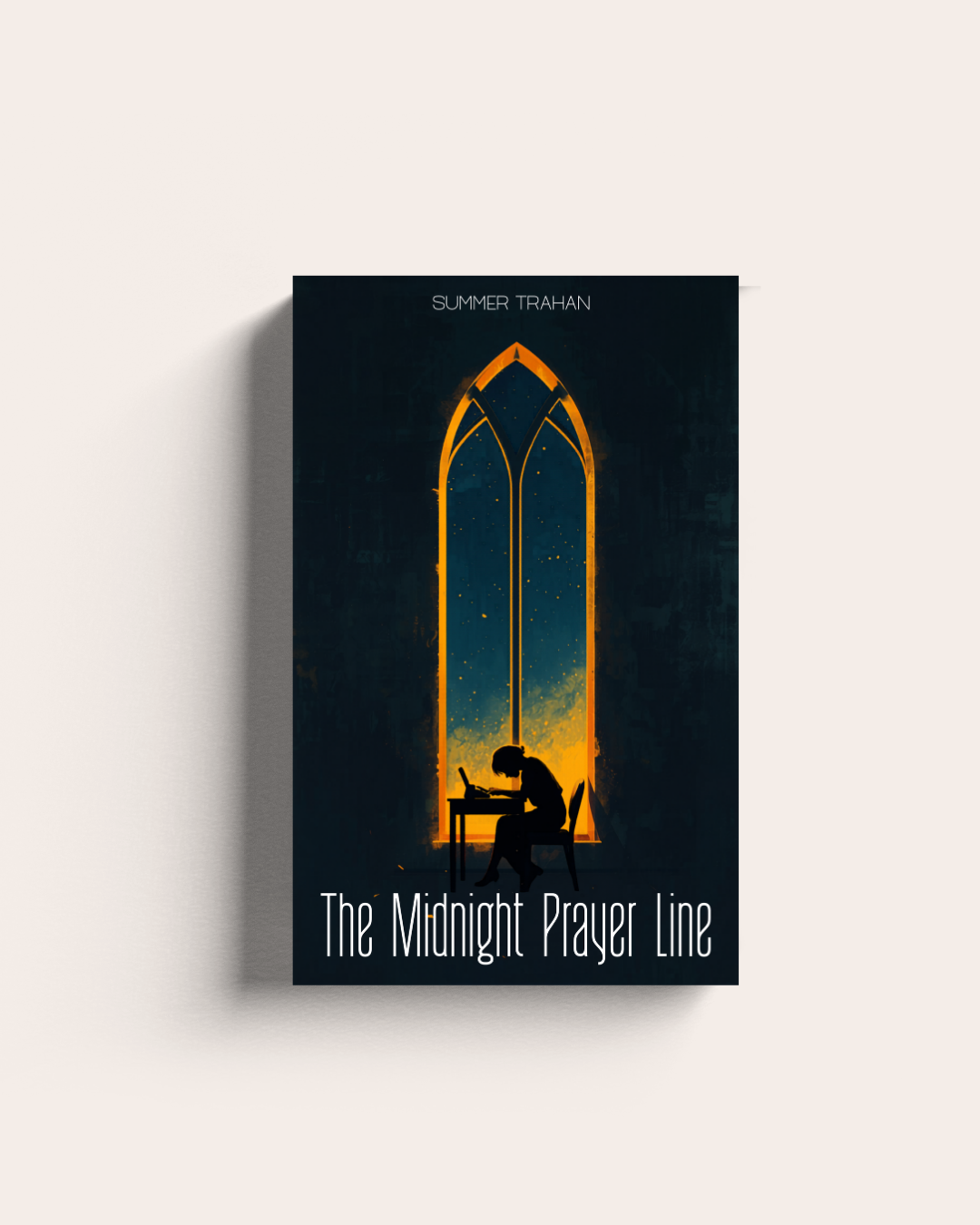
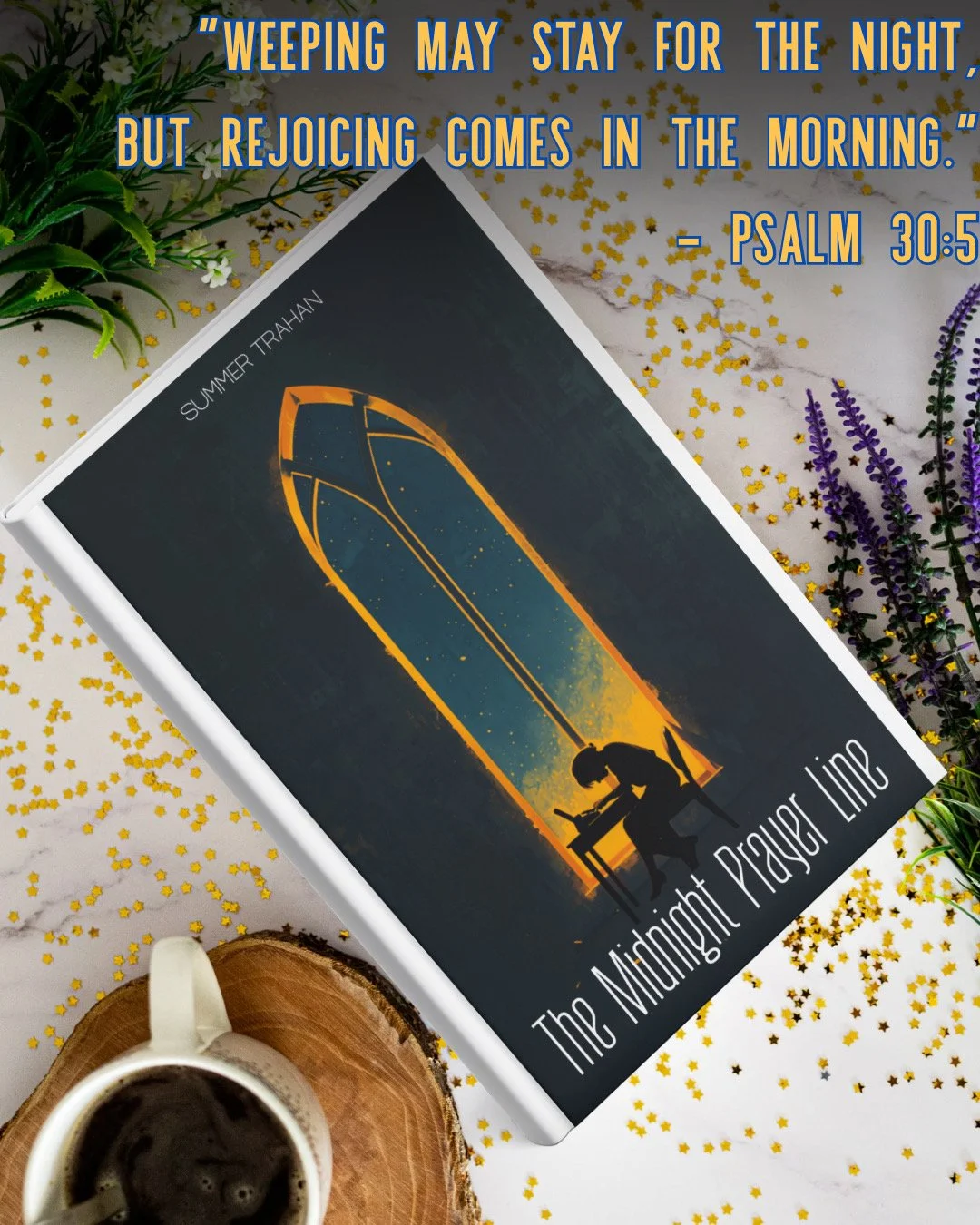
She saves everyone else. Who will save her?
Mallory Chen has spent five years as a crisis hotline counselor, talking strangers through their darkest moments. She's good at it — expertly trained, deeply committed, completely burned out. When her supervisor mandates two weeks off, Mallory reluctantly agrees to volunteer on the midnight shift of a small church's anonymous prayer line. No names, no crises, just listening. Simple.
Except nothing about it turns out to be simple.
The callers become her anchors. A lonely widow who calls every Thursday. A teenager wrestling with identity in the dark. And then there's the man with the warm, careful voice who calls on Tuesday nights — a widower three years out from loss who chooses his words like he respects their weight. He never gives his name. She never gives hers. But somewhere between midnight and dawn, in the sacred anonymity of that small prayer room, they begin to know each other in ways that names never could have allowed.
But anonymity has limits.
When the midnight shift is threatened with closure, Mallory fights to save the community she didn't know she needed. When the walls between her and Tuesday begin to crack, she has to face the fear she's been running from for eight years — that being truly known means risking being truly rejected.
And when the truth finally comes out, it's bigger than either of them expected.
The Midnight Prayer Line is a deeply moving contemporary Christian romance about burnout and healing, the courage to be vulnerable, and the unexpected places where community — and love — take root. It's about a woman who has spent her whole life pouring into others learning, at last, to let herself be filled.
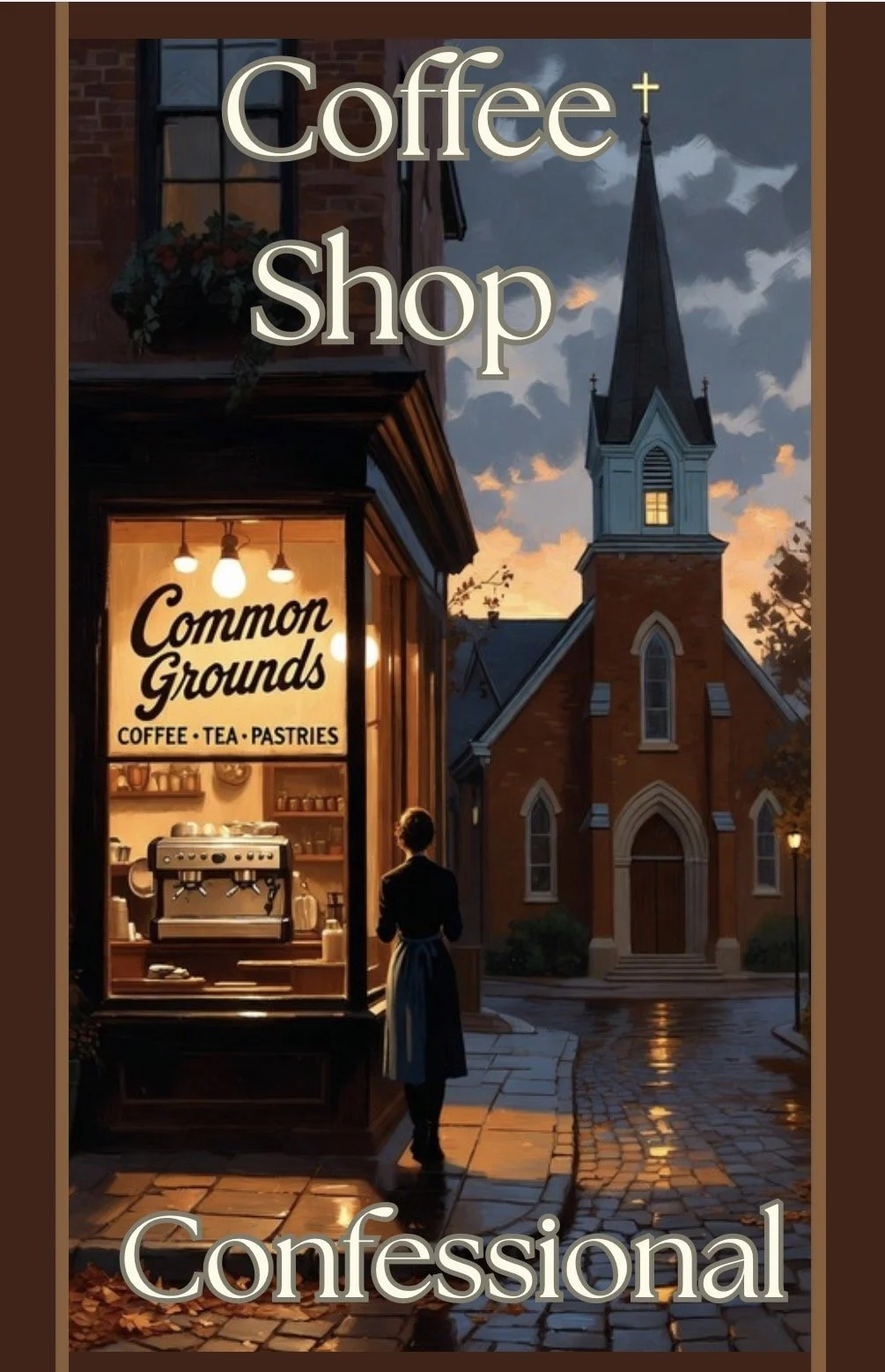
Some confessions don't always belong in a church. They belong across the street, with a good espresso and someone who knows how to listen.
Maggie Calloway makes excellent coffee and keeps her boundaries clear. She co-owns Common Grounds, the warmest coffee shop on Grover Street, and she's built a life that's deliberately simple: good beans, loyal regulars and a Sunday that belongs only to her. What she doesn't do is religion. Not anymore.
But when people from Grace Community Church—the cheerful brick building across the street—start sitting at her counter with things they can't say anywhere else, Maggie finds herself doing something she never planned: listening. Really listening. And somehow, without credentials or theology or any intention whatsoever, she becomes the person people come to when the church feels too formal and their grief feels too heavy.
Enter Pastor Eli Ward.
He's earnest, self-aware and unexpectedly charming. He makes a perfect cortado at home and has very specific opinions about grind size. When he walks into Common Grounds to understand why his congregation is confessing to the barista instead of him, he doesn't come with territory to protect—he comes with genuine curiosity. And a legal pad he never actually uses.
What begins as an unlikely partnership becomes something neither of them planned for: a slow-burn collaboration that blurs the line between ministry and friendship, between faith and the space just outside it. Because grace, it turns out, doesn't check the address before it shows up. And sometimes the most sacred work happens over coffee, in a room that smells like cardamom and second chances.
A cozy romance about ministry without credentials, love without pretense, and the surprising places grace shows up when you stop looking for it in all the traditional spots.
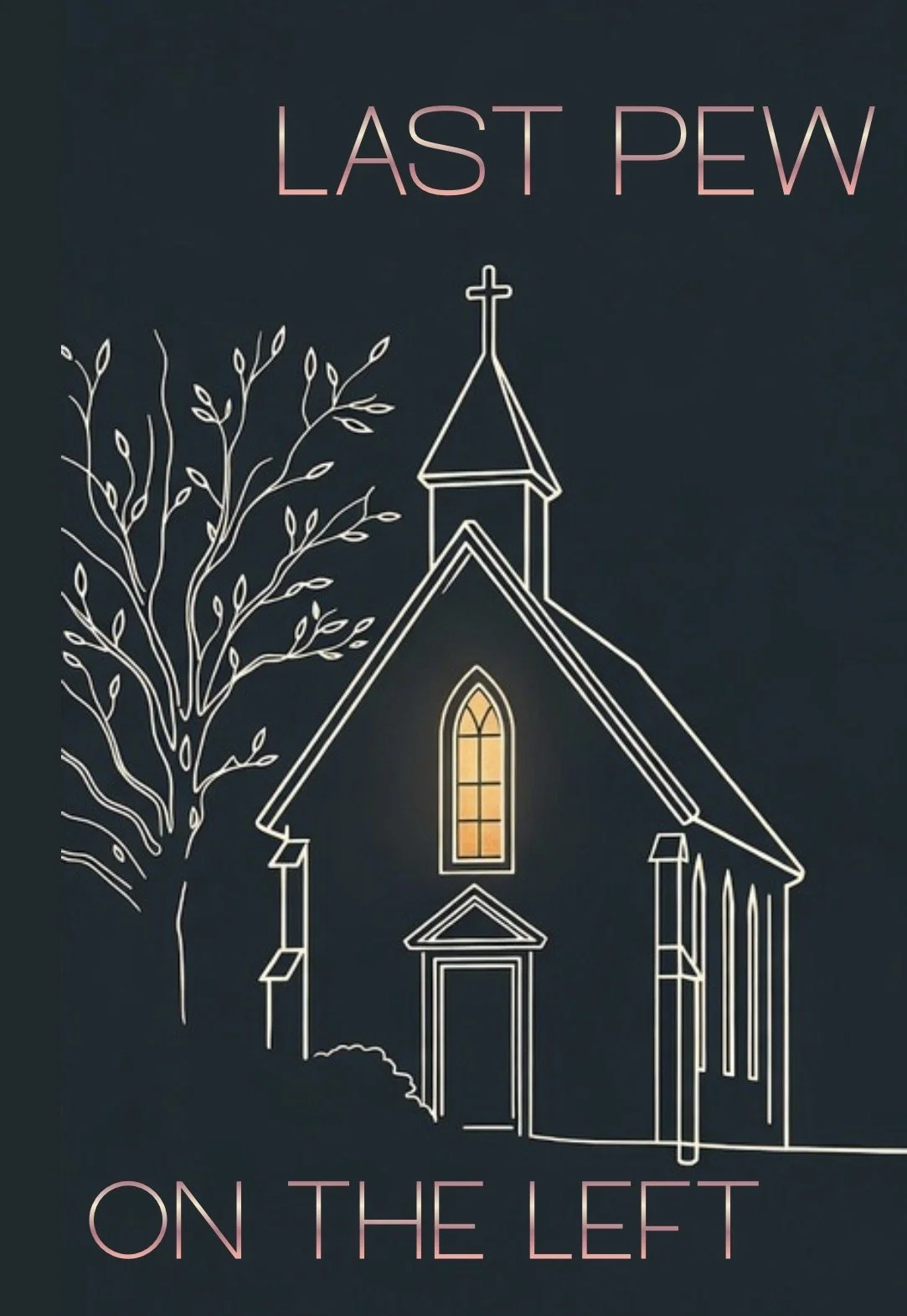
When the last place you'd look for God turns out to be exactly where you find yourself.
Maggie Thornton has spent six months avoiding church, avoiding grief, and avoiding the well-meaning people who want to help her process the loss of her husband. But when her mother's relentless concern pushes her through the doors of Grace Chapel one Sunday morning, Maggie does what any reasonable person would do: she sits in the last pew on the left and makes herself invisible.
Or so she thinks.
What she doesn't expect is the motley crew of misfits, skeptics, and genuine believers who occupy that back corner every week—people who don't perform faith, they practice it. People like Tom, the sardonic engineer with a complicated past. Rachel, the young mother drowning in expectations. And Pastor David, who preaches like someone who's read the footnotes and found them more interesting than the text.
Week by week, in the space between hymns and potluck dinners, Maggie discovers something she didn't know she was looking for: a community that makes room for doubt, a faith that doesn't require her to have all the answers, and the possibility that healing doesn't mean forgetting—it means learning how to carry what you've lost while still moving forward.
Warm, witty, and achingly honest, Last Pew on the Leftis a novel about finding grace in the last place you'd expect it, and learning that the people who sit in the back of the church might understand faith better than anyone in the front row.
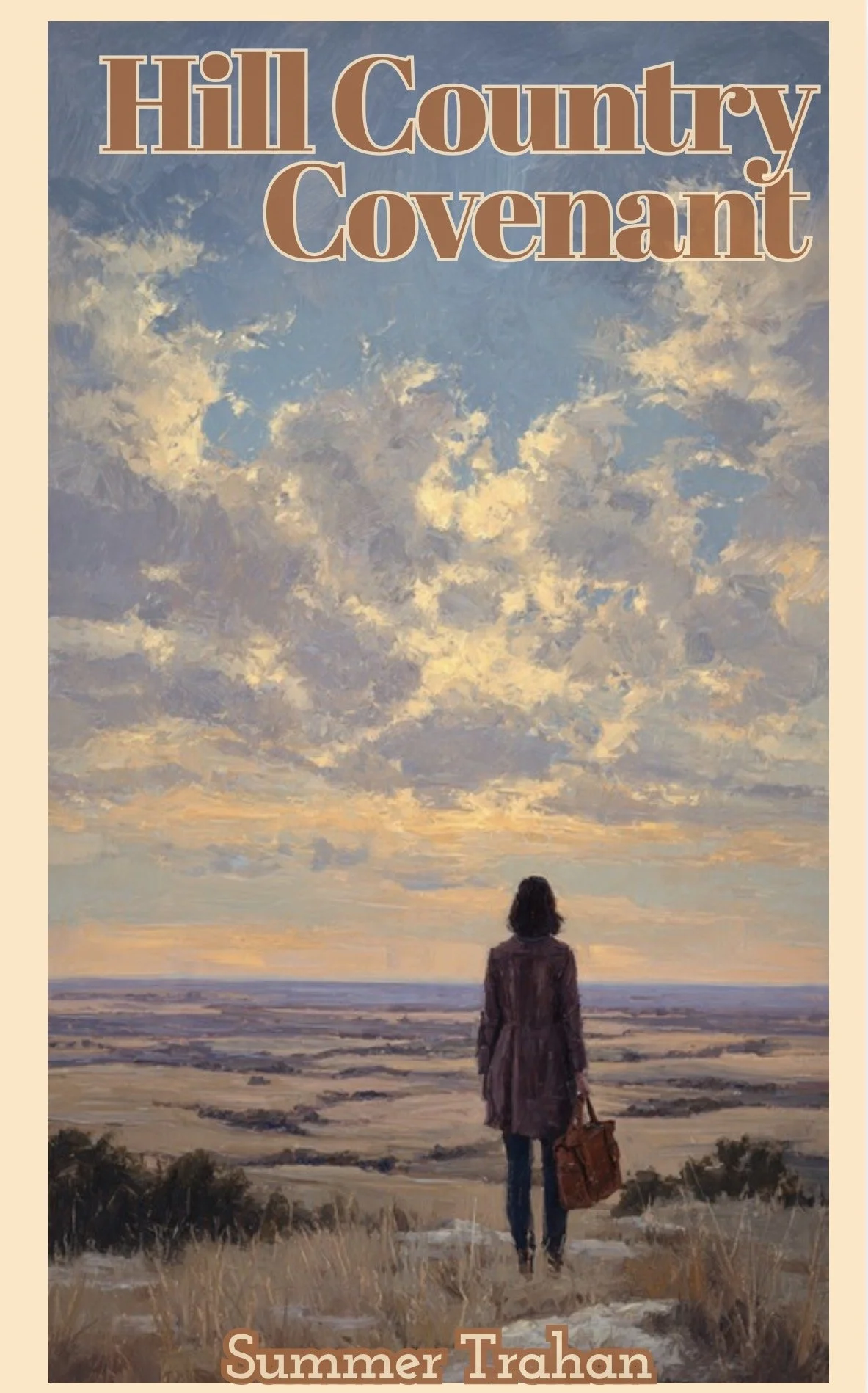
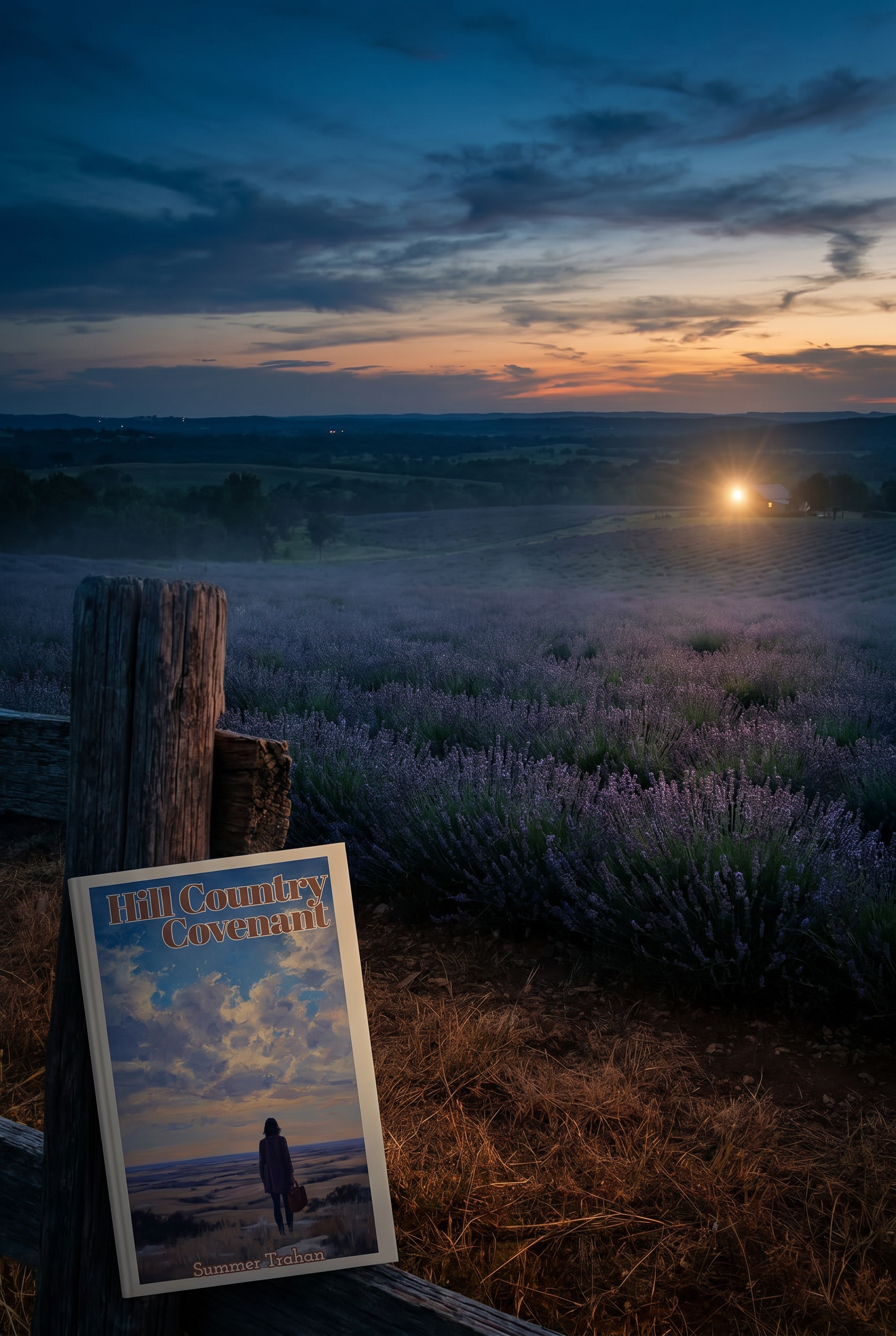
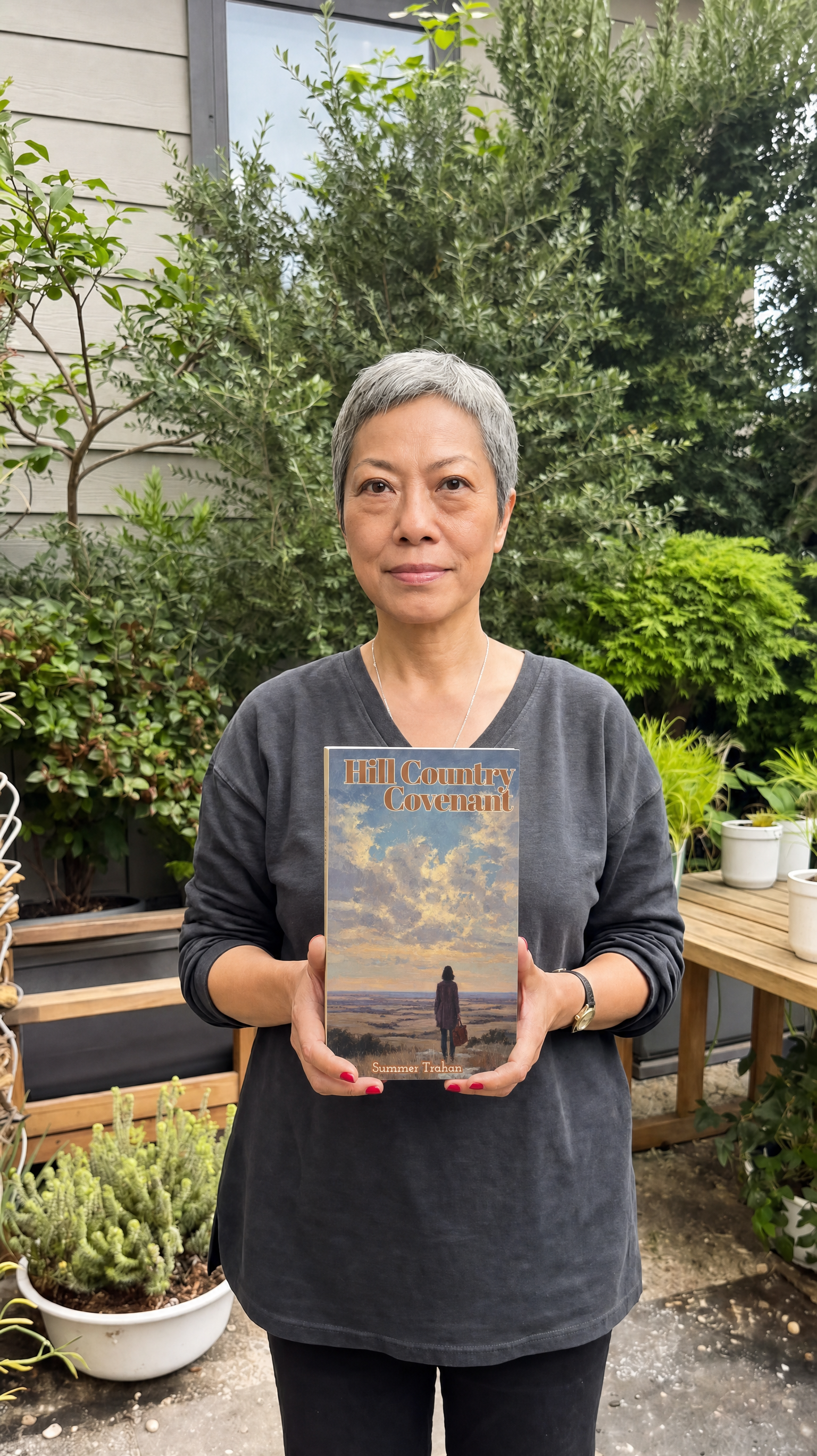
Some fences keep cattle in. Some keep everything else out. They look the same from the road.
Missionary nurse Claire Marchand knows how to walk into a community that looks peaceful from a distance and find what’s hidden underneath. Six months ago, she helped dismantle a trafficking network buried in the Louisiana bayou. Now Faith Reach has sent her to Solin, Texas — a Hill Country town of fourteen hundred, a sheriff in his nineteenth year, and a lavender farm called Harvest Fellowship that everyone in the county considers a good neighbor.
Three women have left the community in the past sixteen months. No one can find them.
When a young community mother whispers a name at the clinic door and turns away — do you know a woman named Liesel Brandt? — Claire recognizes the pattern she documented in the bayou. She knows what she’s looking at. She just needs the evidence to prove it.
DEA agent Wade Broussard has no jurisdiction in Texas, no agency resources, and no good reason to drive eight hours to Hill Country on personal leave. He drives anyway. Alongside investigative journalist Rosa Vega, who has been working this story for eight months and has a folder full of names she cannot locate, the three of them begin to build a case around a community elder who genuinely believes what he’s doing — and a placement operator named Dutch Haverford whose network reaches across three states.
In the loft of the east barn, a woman named Liesel Brandt has been keeping a log for seven years. Thirteen names. Photographs. Evidence. She has been waiting for someone who could read the signal she’s been leaving, and now someone has come.
Hill Country Covenant is a novel about the faith that survives in the darkest rooms and the courage it takes to walk out through the open gate. It is also the story of two self-sufficient people — a missionary nurse and a man who has spent ten years operating undercover — learning to stop managing the distance between them and build something real.
Perfect for readers of Lynette Eason, Colleen Coble, and Dani Pettrey who love Christian romantic suspense with high stakes, a layered mystery, and a romance that earns its resolution.
==Standalone story with a satisfying conclusion
==Book Two of the Covenant Series (can be read independently)
==Clean romantic suspense — no explicit content
==Faith-forward with nuanced, non-preachy spiritual themes

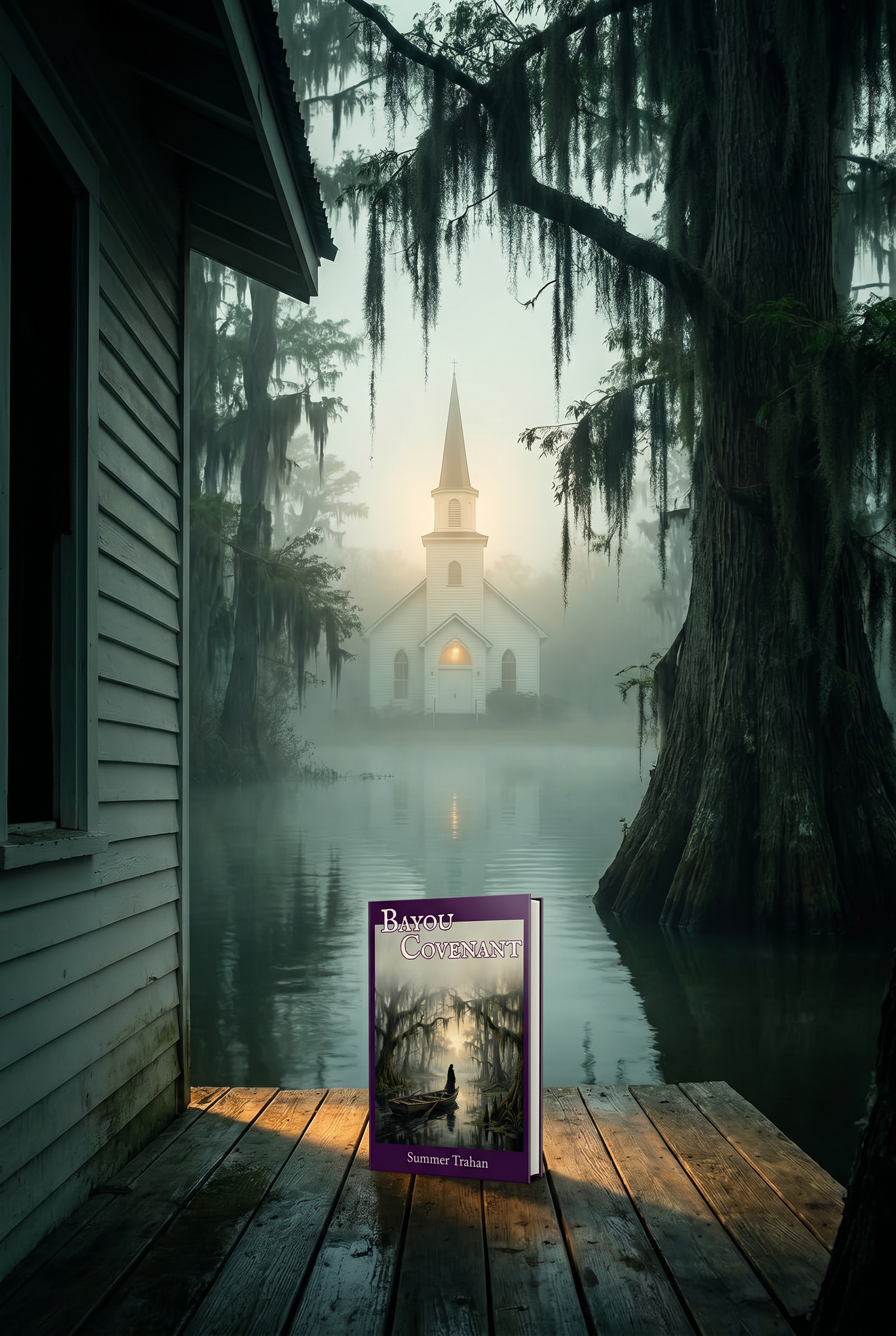
True shepherds lay down their lives. False ones build fences.
Missionary nurse Claire Marchand came to the Louisiana bayou to disappear. Eighteen months after her fiancé’s death in a West Africa clinic, she’s been running — from grief, from the deployments she can’t face, from the version of herself that existed before loss. Covenant Reach sounds like exactly what she needs: a secluded Christian community deep in the backwater, six weeks of basic medical care, nothing complicated.
She arrives at dawn. The compound is beautiful — white-painted buildings, a chapel spire, a vegetable garden in careful rows. Elder Silas Broussard receives her with warm authority. The community brings her food and asks polite questions and seems genuinely glad she’s come.
And then the small things begin to accumulate.Women whose bodies hold themselves wrong. Faces performing the right emotion a beat too late. A teenage girl who mouths two words across the dining hall — help me — and then looks away. A note slipped under Claire’s cottage door: They took my baby. They’ll take yours too if you stay.
The woman Claire is called to treat hasn’t fallen. The compound’s one telephone is monitored. And the new community member who arrived days before she did — Elder Silas’s quiet, watchful nephew — is not a returning believer.
Wade Broussard is DEA undercover, embedded to break a drug trafficking network running supply boats beneath the compound’s missionary cover. He did not account for a real missionary nurse. He didn’t expect to feel responsible for her. And he certainly didn’t expect, when his extraction window finally opens, to realize he doesn’t want to leave without her.
As Claire maps the full scope of what’s happening beneath Covenant Reach’s surface — systematic abuse, women held captive by weaponized faith, children used as leverage — she and Wade have forty-eight hours to get a compound full of people to safety before his cover falls and the exits close for good.
Bayou Covenant is a novel about grief that becomes purpose, faith tested in the darkest rooms, and two people who find each other on the other side of what they thought they couldn’t survive. It is also a story about the difference between a shepherd who loves you and a fence with scripture on it.
Perfect for readers of Lynette Eason, Colleen Coble, and Dani Pettrey who love Christian romantic suspense with a propulsive plot, layered characters, and a faith thread that earns its resolution.
==Standalone story with a satisfying conclusion
==Book One of the Covenant Series
==Clean romantic suspense — no explicit content
==Faith-forward with nuanced, non-preachy spiritual themes

Home isn't a building. It's the people who show up—week after week, Tuesday after Tuesday.
For fifteen years, six women have gathered at their corner table in Cornerstone Community Church's fellowship hall. They've become more than friends. They've become family.
Sheila brings homemade rolls and nurtures everyone she meets.
June keeps everything organized and desperately needs control.
Ava quotes Scripture but secretly wonders if God is listening.
Susan knows everyone's business and calls it ministry.
Liza sketches every moment, bearing witness to what matters.
Wendy questions everything and keeps her exit strategy ready.
Then the announcement comes: Cornerstone is merging with a contemporary megachurch across town. The building will be sold. Services end in three months.
Suddenly, everything these women have built—their rhythms, their routines, their sacred corner table—is disappearing.
They make a pact to stay together. To keep meeting for Tuesday lunch no matter what. To prove that community can survive change.
But when the building is demolished and their circle fractures under the weight of grief, doubt, and fear, they each face their darkest moment:
• Sheila realizes her identity is built on being needed
• June discovers she can't control her way out of chaos
• Ava admits her faith might have been nostalgia all along
• Susan fears she's gossip, not love
• Liza feels invisible without her art mattering
• Wendy doesn't believe she belongs anywhere
Can the Tuesday table survive being rebuilt from broken pieces?
The Tuesday Table is a tender, honest story about six ordinary women navigating extraordinary loss. It's about the death of certainty and the resurrection of grace. About holding onto what matters when everything else is stripped away.
Themes: Church community • Women's friendship • Grief and healing • Faith in transition • Rebuilding after loss • Grace over structure • Intergenerational ministry "Sometimes the most sacred things are the ones we almost lose."
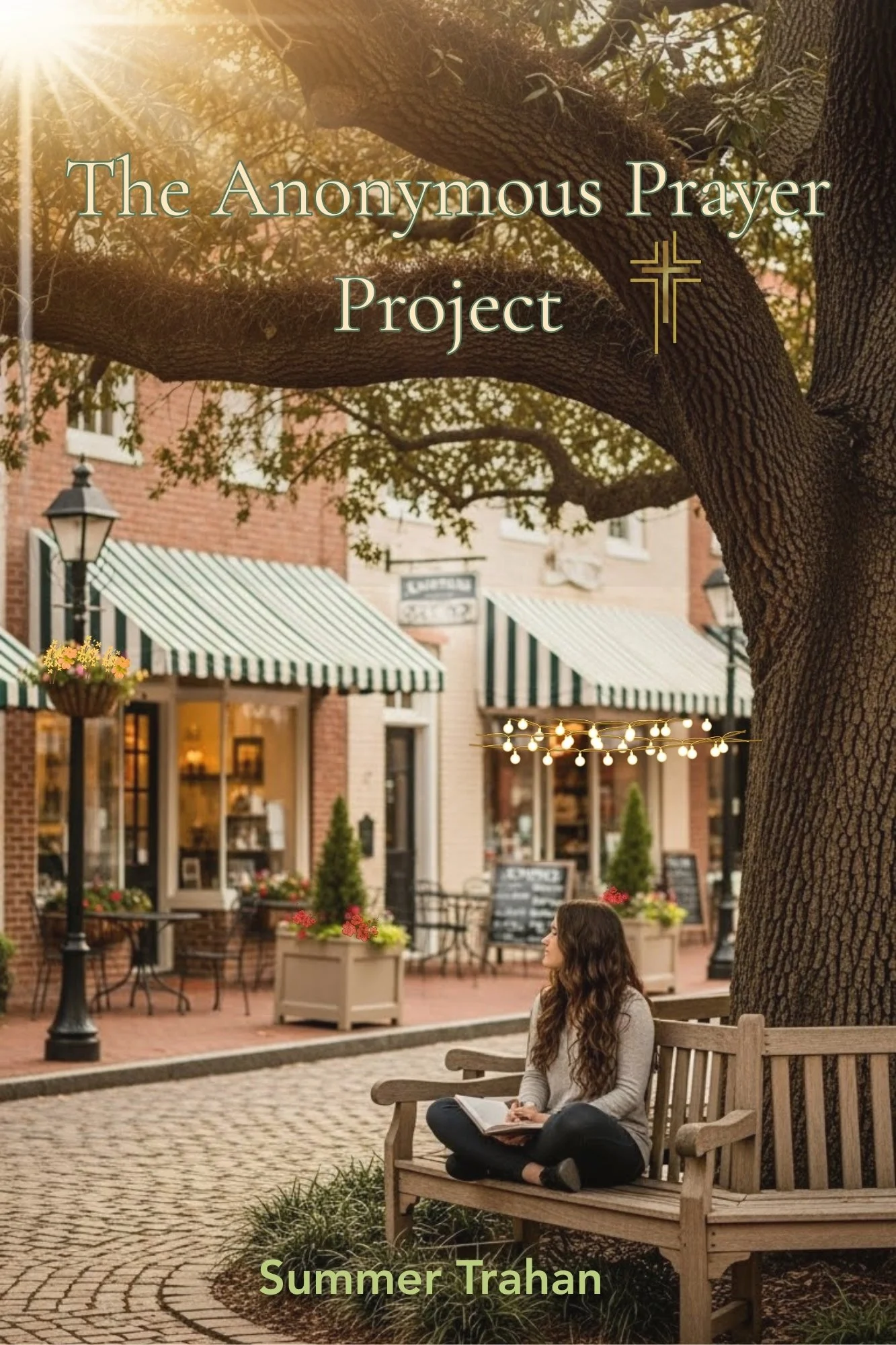
The Anonymous Prayer Project is a tender, funny novel full of the kind of hope that costs something.
Perfect for book clubs, women's ministry groups, and anyone who has ever been brave enough to let someone pray for them.
Ellie Harper is the quiet engine of the Charleston Inter-Church Outreach Center — dependable, warm, and skilled at making herself invisible. When she designs the Anonymous Prayer Project, a twelve-week initiative pairing strangers from five local churches to pray for each other anonymously, she plans to coordinate it flawlessly from the background. She does not plan to participate.
Her director signs her up anyway.
Each Monday, a new theme arrives: Identity. Fear. Compassion. Their Heart. Forgiveness. And each week, Ellie discovers that the curriculum she wrote for everyone else has been waiting to find her. Her anonymous partner — careful, honest, and unexpectedly perceptive — writes back in ways that make her feel known in a way she'd stopped expecting.
She doesn't know it's Caleb.
Caleb Brooks, her quiet, steady coworker, figured out it was Ellie around Week Six. He kept writing anyway — because she needed it to stay anonymous a little longer, and he was willing to wait.
Set among the live oaks and salt-marsh warmth of Charleston, South Carolina, The Anonymous Prayer Project is a story about the prayers we send into the dark and what we find when the light comes on. It's about chronic illness and the courage it takes to receive care. It's about a mother who texts Bible verses followed immediately by photos of dogs in sombreros. It's about a guarded teenager who shows up because someone finally did for him. And it's about two people discovering that being fully known — by God, by a stranger, by someone who's been right there all along — is the thing they were most afraid of and most needed.

A suspended arson investigator. A pastor who won't stop telling the truth. Seven women who built the evidence that could bring down the most powerful man in the county — and died before anyone believed them.
Nora Callahan arrives in Granger's Hollow, Oregon, to close a fire file. She finds two accelerant origins where the official report shows one, a covered-up investigation, and a burned church full of things that were never meant to survive.
The fireproof box in the ruins contains eight months of meticulous documentation — photographs, signed statements, financial records, and a recording — compiled by a group of women who understood that feelings weren't evidence, and that evidence was the only thing that would hold. They were right. Someone made sure they didn't live to see it.
With her credentials suspended, the official channels compromised, and a man named Denton Harwick capable of reaching further than she'd anticipated, Nora has approximately no time and exactly one ally: Eli Greer, the former pastor of the burned church, who got two women out and has been living in the rubble of the rest ever since.
As Nora builds the case that Maren Costello started, she finds herself navigating something she's less practiced at than arson — the specific work of letting someone else carry part of the weight.
EYES LIKE EMBERS is a novel about what it takes to prove the truth, what it costs to carry grief alone, and what happens when two people who have both gotten very good at the performance of being fine find each other in a place where neither of them can manage it anymore.

A faith-based romance about finding love when you've learned to expect loss—and discovering that peace isn't the absence of struggle, but the presence of Someone who never leaves.
She thought chronic pain meant a life alone. He thought one mistake meant he didn't deserve forgiveness. God had other plans.
Helena Young has spent three years managing severe chronic pain in isolation, building a careful life in Coeur d'Alene, Idaho where expectations are low and disappointment is survivable. When a compassionate nurse at her pain management clinic notices the worn research notebooks and the exhaustion she's trying to hide, something shifts—but Helena has learned the hard way that hope costs more than it's worth.
Forrest Sims carries guilt from a medical crisis three years ago that he can't seem to put down. Working at a low-acuity pain clinic, keeping everyone at arm's length, over-preparing for everything—that's safe. That's manageable. Until a patient with silver-blonde hair and radical honesty walks into his treatment room and he realizes some boundaries were made to be crossed.
When they both end up at the same chronic illness support group, their parallel struggles with faith, suffering, and grace begin to interweave. A shared scripture. Small kindnesses. Coffee shop conversations. The terrifying vulnerability of being seen at your worst—and being chosen anyway.
But learning to trust doesn't erase the wounds. When Helena's body betrays another good week with a devastating flare, and Forrest's old crisis replays itself at work, both must decide: do they protect themselves by pulling away, or do they risk everything by showing up imperfect?
Peace Beneath the Pines is an inspirational Christian romance that handles chronic illness, depression, and medical trauma with unflinching honesty and profound grace. For readers who want:
✓ Authentic disability and chronic pain representation
✓ Faith woven naturally into a contemporary love story
✓ Small-town Idaho setting with gorgeous lake and mountain scenery
✓ Slow-burn romance built on emotional intimacy
✓ Clean, closed-door content appropriate for all ages
✓ Characters who wrestle honestly with God and come out stronger
✓ A happily-ever-after that acknowledges suffering doesn't end but shows love persisting through it
Perfect for fans of Francine Rivers, Karen Kingsbury, and readers seeking Christian romance novels that honor both faith and lived experience with chronic illness.
Some love stories aren't about healing. They're about learning that being held is enough.
No results match your search. Try removing a few filters.

